Showing posts with label G. Show all posts

Sunday, December 19, 2010

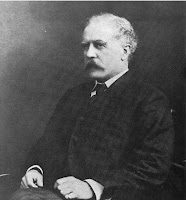
Frederick Griffith

Fred Griffith
Frederick Griffith (1879 - 1941) British public health scientist, who in 1927 conducted the now famous experiment, which demonstrated the phenomenon of bacterial transformation, then attributed to the presence of a transforming principle, and later proved by Oswald Avery, Colin MacCleod and Maclyn Mccarty as genetic DNA. In what is now known as the Griffith experiment, Frederick Griffith demonstrated conclusively that the non-pathogenic R strain of the pneumococcus can be induced to transform into the pathogenic S strain. It was said that Griffith and his colleague-friend William Scott could do more with a kerosene tin and primus stove than most men could with a palace, because of the fact that the laboratory conditions they worked in were primitive, and yet their research was outstanding. Griffith is supposed to have died along with his friend Scott in his apartment amid an air raid during WW II's London Blitz.

Hans Christian Gram

Hans Christian Gram
Hans Christian Gram (1853 - 1958) Danish bacteriologist, who developed the Gram stain method of differential staining that has become a widely used method for classifying pathogenic bacteria. Gram was also among the first to notice that macrocytes are a characteristic feature of pernicious anemia, which was in fact the subject matter of his doctoral thesis. Gram studied botany before studying medicine and he retained a life long interest in plants. He was a very modest man and remarked on his publication of the Gram staining procedure that it was an imperfect method which he hoped would be improved upon by fellow scientists.

Saturday, December 11, 2010

Archibald Edward Garrod

Archibald Garrod
Archibald Edward Garrod (1857 - 1936) English physician, son of Alfred Garrod, who pioneered the study of inborn errors of metabolism. From the study of patients with alkaptonuria, he came to the conclusion that certain mysterious diseases can be inherited through successive generation of families according to Mendelian laws. In 1908, he wrote a famous book (which he expanded in 1923), Inborn Errors of Metabolism, where he described four disorders (Garrod's tetrad) alkaptonuria, cystinuria, pentosuria, and albinism, all caused by an inherited defect in certain metabolic pathways. He also formulated the "one gene, one enzyme" hypothesis and described the recessive nature of most inherited enzyme defects.  His daughter, Dorothy Garrod, was a pioneering archeologist, famed for her work on the Paleolithic period.

Alfred Baring Garrod

Alfred Garrod
Alfred Baring Garrod (1819 - 1907) English physician. He was the first to discover an abnormal increase in the amount of uric acid in the blood of patients with gout. He was also the first to propose using lithium to treat gout, also recommending it to treat mood disorders hypothesizing that gout may cause mental disturbances. Garrod is credited with coining the term rheumatoid arthritis which he firmly established as a separate disorder. In his old age, he served as physician-extraordinary to Queen Victoria. Physician Archibald Edward Garrod and the vertebrate zoologist Alfred Henry Garrod were his sons.

Tuesday, August 17, 2010

Camillo Golgi

Camillo Golgi
Camillo Golgi (1843-1926) Italian physician, pathologist and neuroscientist, after whom the intracellular organelle, Golgi apparatus is named. He made important contributions to neuroscience by perfecting a method for staining the nervous system, using mainly silver (now known as the Golgi stain). His researches into neurohistology led to the eventual acceptance of the neuron doctrine. He also discovered a tendon sensory organ (Golgi receptor) and was the first to show that the distal nephron in the kidney returns to the glomerulus from where it originated. Camillo Golgi shared the Nobel Prize for Physiology or Medicine in 1906 with the famous Spanish neurologist, Santiago Ramon y Cajal. In the town of Pavia, where Golgi studied and worked, there are several landmarks standing in his memory.