Showing posts with label C. Show all posts

Sunday, December 12, 2010

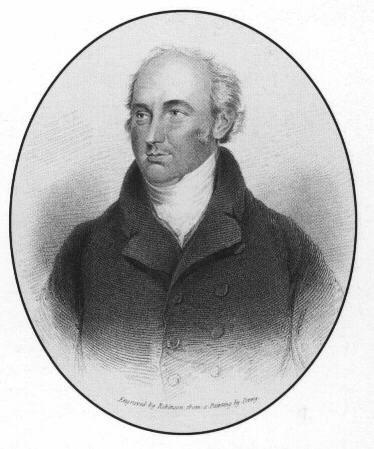
Astley Paston Cooper

Sir Astley Cooper
Sir Astley Paston Cooper (1768 - 1841) English surgeon and anatomist, renowned for his contributions to anatomy and new surgical techniques and treatments. Many anatomical structures are named after him, such as the suspensory ligaments of the breast (Cooper's ligaments), superior pubic ligament (Cooper's pubic ligament), Cooper's fascia of the spermatic cord and Cooper's stripes (a fibrous structure in the ulnar ligament). Cooper was also renowned for his surgical skills and innovations. He made advances in surgery of the hernia, and of vessels, his most famous contribution being the use of ligation to treat aneurysms. Many diseases were also named after him, such as Cooper's testis (neuralgia of the testicles), Cooper's neuralgia of the breast, Cooper's retroperitoneal hernia, and Cooper's disease (benign cysts of the breast). For his removal of the infected sebaceous cyst from the head of King George IV, he was made a baronet. He had one of the most extensive surgical practices in the first half of the 19th century. His lectures were widely attended by students, and the poet John Keats was one of his students during his medical schooling.
Tuesday, September 28, 2010

William Cowper

William Cowper
William Cowper (1666 - 1709) English anatomist and surgeon, famous for the eponymous Cowper's glands, the bulbourethral glands of the male genitourinary system, which he was the first to describe. In 1698, he published The Anatomy of Humane Bodies, which was to bring him both fame and notoriety. This work is widely considered to be a plagiarised version of the Dutch anatomist Govard Bidloo's work that was published a few years ago. Though it contained much original work and writing from Cowper himself, essentially much of the text and diagrams were taken directly from Bidloo's work, which Cowper (or his publishers) had purchased in bulk, when Bidloo's book did not have good sales back in his country. This incident was to lead to numerous vitriolic exchanges between both the anatomists, but even with the fact that Cowper burrowed the work and did not give any credit to Bidloo, William Cowper still stands today as one of the most original and diligent anatomists of his time.

William Cheselden

William Cheselden
William Cheselden (1688 - 1752) Famous English surgeon and anatomist, responsible for establishing surgery as a separate profession from the former barber-surgeons. He played an important role in the creation of the Company of Surgeons, which was to later become the Royal College of Surgeons of England. As an anatomist, Cheseldon wrote two highly acclaimed and popular books on human anatomy and osteology. He performed the first known surgical cure for blindness. He also created the lateral lithotomy procedure for bladder stone extraction, for which he was very famous, taking only 30-90 seconds to perform the entire removal operation. Cheselden is also credited with the first iridectomy operation, which he used to cure certain forms of blindness by creating an artificial pupil. He also described the role of saliva in digestion, and held that digestion was not a mere mechanical process of grinding, but also of chemical reactions. Cheselden attended Sir Issac Newton on his last illness and was a friend of the famous poet Alexander Pope and Sir Hans Sloane, physician and collector, whose collections were to later become the British Museum.