Sunday, December 12, 2010

Astley Paston Cooper

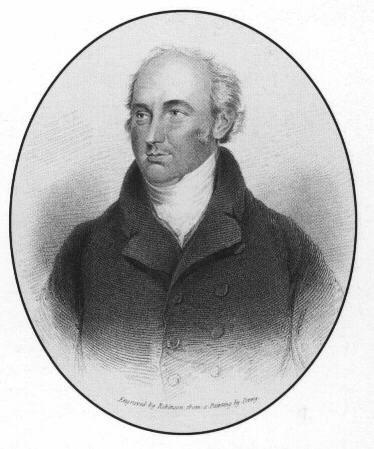
Sir Astley Cooper
Sir Astley Paston Cooper (1768 - 1841) English surgeon and anatomist, renowned for his contributions to anatomy and new surgical techniques and treatments. Many anatomical structures are named after him, such as the suspensory ligaments of the breast (Cooper's ligaments), superior pubic ligament (Cooper's pubic ligament), Cooper's fascia of the spermatic cord and Cooper's stripes (a fibrous structure in the ulnar ligament). Cooper was also renowned for his surgical skills and innovations. He made advances in surgery of the hernia, and of vessels, his most famous contribution being the use of ligation to treat aneurysms. Many diseases were also named after him, such as Cooper's testis (neuralgia of the testicles), Cooper's neuralgia of the breast, Cooper's retroperitoneal hernia, and Cooper's disease (benign cysts of the breast). For his removal of the infected sebaceous cyst from the head of King George IV, he was made a baronet. He had one of the most extensive surgical practices in the first half of the 19th century. His lectures were widely attended by students, and the poet John Keats was one of his students during his medical schooling.
Edward Albert Sharpey-Schafer

Edawrd Sharpey-Schafer
Edward Albert Sharpey-Schafer (1850 - 1935) English physiologist, who coined the term "insulin" after theorizing that diabetes mellitus was caused by the deficiency in production of a single substance by the pancreas. He also coined the term "endocrine" for substances that are directly released into the bloodstream, after having discovered adrenaline with George Oliver (English physician and famed inventor of many medical instruments, such as the hemoglobinometer and arteriometer). The Schafer method of artificial respiration (the prone-pressure method) was named after him. He added Sharpey to his name as a tribute (and also to perpetuate) to his teacher, the Scottish anatomist William Sharpey (after whom Sharpey's fibres, which join the periosteum to the bone lamellae, are named).

William Brooke O'Shaughnessy

William O'Shaughnessy
William Brooke O'Shaughnessy (1808 - 1889) Irish physician. He is most famous for his introduction of cannabis and its healing properties to western medicine. He carried out experiments on the therapeutic uses of cannabis during his tenure as physician at the East India Company in Calcutta, India. He was also an expert on telegraphy, and is considered the father of Indian telegraph as he was responsible for laying of much of India's early telegraph lines under Lord Dalhousie's administration. O'Shaughnessy was knighted by Queen Victoria for his telegraph services in India. He also devised the first intravenous fluid and electrolyte replacement therapy for cholera patients. Much of his life after 1860, when he returned to Europe on sick leave, till his death in 1889 is obscure and remains an unsolved mystery.

Saturday, December 11, 2010

Archibald Edward Garrod

Archibald Garrod
Archibald Edward Garrod (1857 - 1936) English physician, son of Alfred Garrod, who pioneered the study of inborn errors of metabolism. From the study of patients with alkaptonuria, he came to the conclusion that certain mysterious diseases can be inherited through successive generation of families according to Mendelian laws. In 1908, he wrote a famous book (which he expanded in 1923), Inborn Errors of Metabolism, where he described four disorders (Garrod's tetrad) alkaptonuria, cystinuria, pentosuria, and albinism, all caused by an inherited defect in certain metabolic pathways. He also formulated the "one gene, one enzyme" hypothesis and described the recessive nature of most inherited enzyme defects.  His daughter, Dorothy Garrod, was a pioneering archeologist, famed for her work on the Paleolithic period.

Alfred Baring Garrod

Alfred Garrod
Alfred Baring Garrod (1819 - 1907) English physician. He was the first to discover an abnormal increase in the amount of uric acid in the blood of patients with gout. He was also the first to propose using lithium to treat gout, also recommending it to treat mood disorders hypothesizing that gout may cause mental disturbances. Garrod is credited with coining the term rheumatoid arthritis which he firmly established as a separate disorder. In his old age, he served as physician-extraordinary to Queen Victoria. Physician Archibald Edward Garrod and the vertebrate zoologist Alfred Henry Garrod were his sons.

Sir William Jenner

William Jenner
Sir William Jenner (1815 - 1898) English physician, primarily known for making the distinction between typhoid and typhus as separate diseases, which until then were considered manifestations of the same illness. He was royal physician to Queen Victoria and as a mark of her appreciation for his services in treating Prince Albert's typhoid, she made him a baronet. As a doctor at the Hospital for Sick Children at Great Ormond street, he was much loved by the children, in spite of his deeply unprepossessing appearance. Jenner was a workaholic, and is known to have quipped "Amusements! My amusement is pathological anatomy!" when repeatedly asked about his leisurely pursuits. As a physician he had immense reputation and was widely consulted, and had amassed a large fortune by the time of his death.

Pieter Klazes Pel

Pieter Klazes Pel (1852 - 1919) Dutch physician and professor of internal medicine. He came from a generation of physiciains, both his father and grand-father had been doctors, and his sons also went on to become doctors. Pel is widely known for his description of the Pel-Ebstein fever, a cyclical fever that occurs rarely in patients suffering from Hodgkin's lymphoma. He also described the Pel's crises, an ocular crises occuring in tabes dorsalis, causing intense paroxysmal neuralgic pain in the eyes and nearby ophthalmic areas. Pel also was a renowned medical teacher, who shared the opinion of his other great contemporary Sir William Osler, that medicine is best taught and learned at the bedside rather in classrooms. His lectures were well attended and enjoyed by students, one of his famous quotes being "When someone tells me that an animal on four feet is walking around in the yard next door, it could be a small tiger or elephant, but I would still think of a cat or a dog."